
5-Minute Mindful Reset: Come Back to the Room with Grounding Techniques for Anxiety
Picture this: your mind races like a leaf caught in a sudden gust, tumbling through worries about tomorrow's meeting, yesterday's conversation, and that nagging what-if looping endlessly. The room around you? A blur. You're not really there. Anxiety has whisked you away, leaving your body humming with tension while your thoughts scatter. What if, in just five minutes, you could gently tug yourself back—feet on the floor, eyes on something solid, breath steadying like an old friend returning home?
Welcome to the 5-minute mindful reset, a quick calming practice designed to bring you back to the room. This isn't about forcing calm or erasing discomfort; it's about grounding techniques for anxiety that invite you to land softly in the present. Rooted in mindfulness for stress relief, these emotional regulation tools may support a sense of steadiness amid the storm. No mat, no quiet corner required—just you, this moment, and one steady thing to hold onto.
Why a 5-Minute Mindful Reset Feels Like Coming Home
When anxiety flares, it often yanks us out of our bodies and into a mental echo chamber. Thoughts amplify, heart quickens, and suddenly the chair you're sitting in feels distant, unreal. Grounding techniques for anxiety work by bridging that gap—reconnecting you to the physical world right here. Think of it as pressing a gentle reset button: not to fix everything, but to pause the spin cycle long enough to breathe.
This practice draws on simple somatic cues, helping you find one steady thing amid the flux. Over time, it may foster resilience, turning overwhelm into a manageable wave rather than a tidal pull. Ready to try? Let's walk through the five steps together, each building on the last like stepping stones across a rushing stream.
The 5-Step Flow: Your Grounding Techniques for Anxiety
Set a timer for five minutes if it helps, or simply commit to the flow. Sit or stand wherever you are. Let these steps guide you back to the room—one layer at a time.
-
Land: Contact the Ground Beneath You
Start by feeling your connection to the earth. Press your feet firmly into the floor, noticing the texture under your soles—cool tile, soft carpet, the subtle give of wood. If seated, let your sit bones settle into the chair, hands resting on your thighs. Sense the weight of your body dropping down, rooting like a tree in fertile soil. This simple contact may anchor you, whispering, "You're here. Solid." Pause for 30 seconds, letting that sensation spread.
-
Lengthen: Breathe with Intention
Shift to your breath, not to control it, but to lengthen it slightly. Inhale through your nose for a count of four, feeling your belly soften; exhale slowly through your mouth for six, like fogging a window. Do this three times. Notice how the out-breath eases your shoulders, creating space. Your breath becomes the steady rhythm pulling you deeper into the room—no forcing, just allowing what shifts.
-
Name: Label What Arises
Now, gently name your experience without judgment. Silently say, "This is racing thoughts," or "This is tightness in my chest." Labeling diffuses the intensity, like shining a light on shadows. It doesn't make feelings vanish; it may simply make room for them to coexist with your steadiness. Speak inwardly, once or twice, observing what softens.
-
Notice: Find One Steady Thing
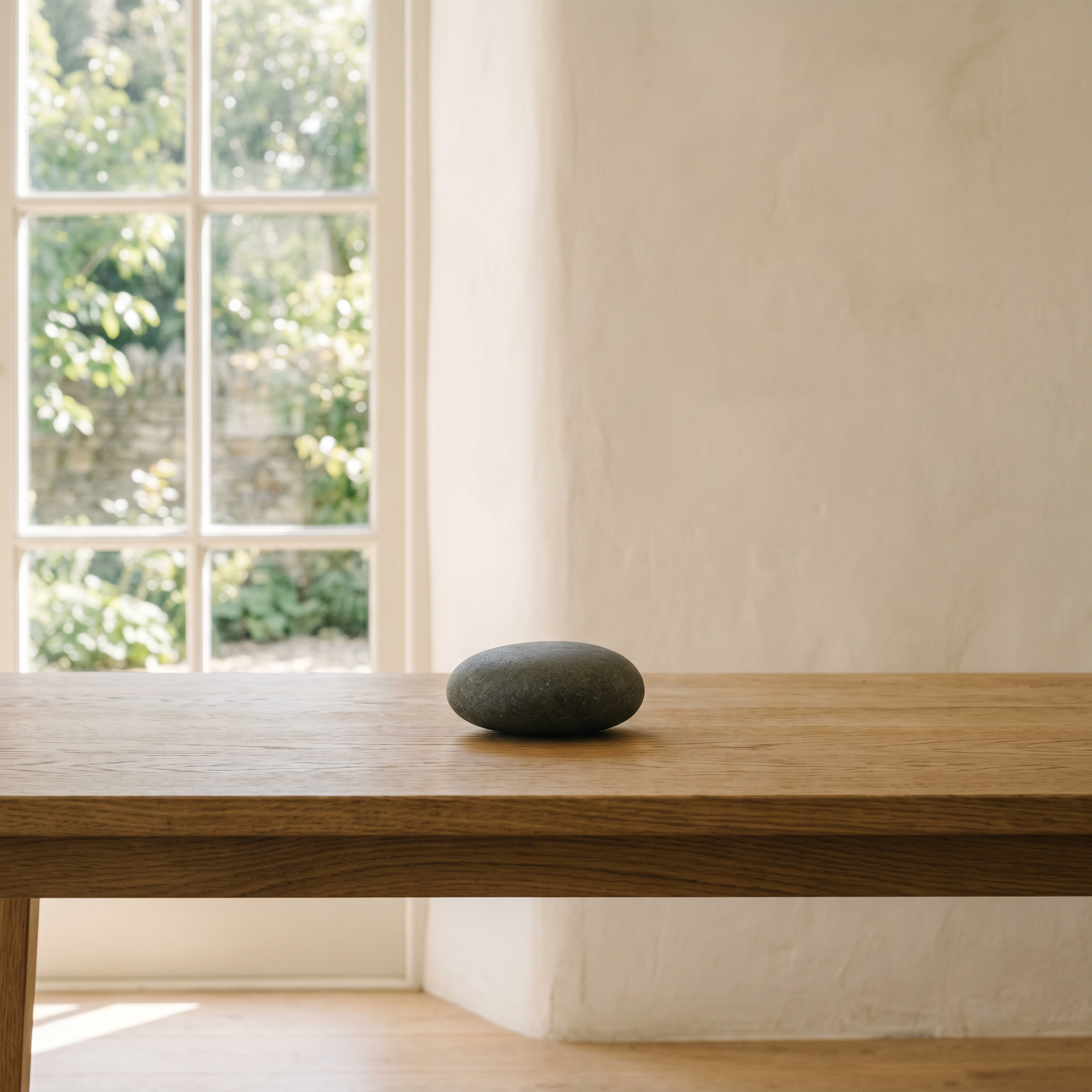
Lift your gaze or soften it to the world around you. Pick one steady thing: the edge of your desk, a window frame, the curve of a mug. Trace its lines with your eyes—the color, the shape, its quiet permanence. Let it become your anchor. "This mug holds its form," you might note. Amid mental whirl, this external detail may steady your inner world, drawing you fully back to the room.
-
Next: Choose One Small Action
Finally, bridge to motion. What's one tiny step forward? Sip water, stretch your fingers, or stand and shake out your arms. This action seals the reset, carrying the calm into your next moment. Notice what shifts as you move—no rush, just the next breath.
In five minutes, you've come back to the room—not perfect, but present.
Deepen the Practice: A Simple Journaling Prompt
To weave this quick calming practice into your day, try this journaling prompt right after: "What one steady thing did I notice today, and how did it feel to return to it?" Jot a few lines. Over weeks, these notes may reveal patterns in your emotional regulation tools, highlighting what supports your calm most.
Carry the Reset Forward
This 5-minute mindful reset isn't a cure-all, but a reliable companion for those anxiety-tinged moments. Practice it in line at the store, before a call, or when the day piles up. Notice what unfolds—perhaps a quieter mind, a lighter step. For more mindfulness for stress relief practices, explore our resources page.
Back in the room, one steady breath at a time. You've got this.